
Sprinkler systems provide a practical and efficient way to control dust across haul roads, access routes, stockpile areas, construction sites and large industrial working zones.
By applying water consistently across defined areas, sprinkler systems can help reduce surface dust before vehicle movements, wind or site activity lift fine particles into the air.
ODS supplies dust suppression sprinkler systems for sites throughout Scotland, with solutions suitable for temporary projects, permanent operations and automated applications.
Based in Ayrshire, we can help identify a system suited to the site layout, water supply, required coverage and operating conditions.
Read more about Dust Control Solutions.
A dust suppression sprinkler system distributes water across a defined area using strategically positioned sprinkler heads connected to a water supply.
Systems can range from simple temporary installations to larger automated networks covering roads, stockpiles or operational areas.
Depending on the application, a sprinkler system may include:
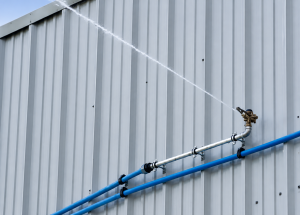
The objective is to maintain sufficient surface moisture to reduce dust generation without unnecessarily saturating the site.
Read more about Sprinkler Systems.
Sprinkler systems can be used across a wide range of industries and applications.
Typical locations include:
They are particularly useful where the same area requires repeated treatment throughout the working day.
Haul roads can generate continuous dust where heavy plant and HGVs repeatedly travel over unsealed surfaces.
Fixed or temporary sprinklers can provide regular treatment along heavily trafficked sections of road.
This can be useful where:
Sprinklers can be positioned along the road and operated according to site conditions, traffic and weather.
Read more about Haul Road Dust Suppression Scotland.
Quarries often contain permanent roads, processing yards and stockpile areas that require regular dust control.
Sprinkler systems can provide consistent coverage across defined areas while reducing reliance on repeated bowser movements.
Applications can include:
Different parts of the quarry may still require different forms of dust suppression.
Sprinklers may control road and surface dust while nozzles or fog cannons are used around crushers, screens and other airborne dust sources.
Read more about Quarry Dust Suppression Scotland.
Construction sites can generate significant surface dust from vehicle movements, exposed ground and temporary access roads.
Sprinklers can provide regular dust control across areas that remain active for extended periods.
Applications may include:
Temporary systems can be repositioned as the project progresses and site layouts change.
Read more about Construction Dust Control Scotland.
Wind farm projects can involve long access routes, temporary roads and large areas of disturbed ground.
Where sections of road remain in continuous use, sprinklers may provide an alternative to repeated mobile watering.
They can be used around:
Mobile bowsers can then provide additional coverage across routes that change as construction progresses.
Read more about Wind Farm Dust Suppression Scotland.
Waste and recycling sites can generate surface dust from internal roads, yards, stockpiles and frequent HGV movements.
Sprinkler systems can provide regular treatment across permanent outdoor areas.
Suitable applications include:
Where dust is generated directly from crushers, conveyors or processing equipment, nozzle or atomisation systems may be used alongside sprinklers.
Read more about Waste & Recycling Environmental Solutions Scotland.
Ports, terminals and industrial facilities can include large open areas where surface dust is disturbed by traffic, wind and material handling.
Sprinkler systems can help maintain moisture across:
Automated systems can be particularly useful where the same operational areas require regular treatment.
Read more about Ports & Harbours Environmental Solutions Scotland.
Stockpiles can generate dust during loading, unloading and windy or prolonged dry conditions.
Sprinklers positioned around storage areas can help maintain surface moisture and reduce the amount of material becoming airborne.
Suitable applications can include:
The number and positioning of sprinklers will depend on the size, shape and location of the stockpile area.
Fixed sprinkler systems are suitable where the same area requires consistent treatment over a longer period.
Typical applications include:
Once installed, fixed systems can provide repeatable coverage without requiring equipment to be moved between applications.
Where appropriate, they can also be divided into separate watering zones.
Not every site needs permanent infrastructure.
Temporary systems can be installed for construction projects, seasonal dust problems and changing operational requirements.
They may be suitable for:
Temporary pipework and sprinkler positions can be moved as the site develops.
Automation can reduce the need for manual operation and provide more consistent dust suppression.
Depending on the system, sprinklers can operate using:
Automation can be useful where large areas require frequent treatment or where site teams want greater control over watering patterns.
The operating schedule should still be adjusted according to actual conditions rather than simply watering continuously.
Large sites do not always need every sprinkler operating at the same time.
Dividing a system into zones can allow individual areas to be watered according to activity.
For example, a quarry may operate separate zones for:
This can help target active areas and reduce unnecessary water use.
Sprinklers and bowsers both control dust by applying water to dry surfaces, but each has different advantages.
A sprinkler system may be better where:
A bowser may be better where:
Many sites use both.
A fixed sprinkler network can manage permanent areas while a bowser treats temporary routes and additional working zones.
Read more about Dust Suppression Bowsers Scotland.
Sprinklers and fog cannons are designed for different forms of dust control.
Sprinklers primarily wet surfaces to reduce dust generation.
Fog cannons project fine droplets into the air to control airborne dust.
For example:
Using equipment according to the source can provide more effective control than expecting one system to manage every form of dust.
Read more about Fog Cannons Scotland.
Sprinkler systems are generally designed to cover broader surface areas.
Nozzle systems are usually more targeted.
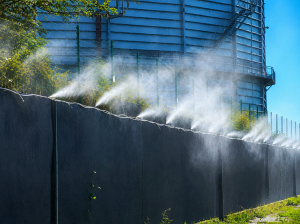
Nozzles may be better suited to:
Sprinklers are better suited to:
Both may form part of the same site-wide dust suppression system.
Read more about Nozzle Systems.
Effective coverage depends on how sprinkler heads are positioned.
The layout should consider:
Incorrect spacing can create dry sections or unnecessary overlap.
A system should therefore be designed around the physical site rather than simply installing sprinklers at regular intervals without considering coverage.
Sprinkler performance depends on receiving suitable water pressure and flow.
A larger network may require pumps or zoning to maintain effective performance across the system.
Factors to consider include:
Remote sites may require additional storage or pumping infrastructure.
Dust suppression requires enough water to control dust, but excessive watering can create unnecessary problems.
These may include:
Sprinkler systems can help provide controlled application when they are configured correctly.
Water consumption can be managed by:
Dust conditions can change considerably according to the weather.
After rainfall, additional watering may not be necessary.
During prolonged dry or windy weather, treatment frequency may need to increase.
A flexible sprinkler system can allow watering schedules to be adjusted as conditions change.
This helps avoid unnecessary watering while maintaining dust control during periods of increased risk.
Many Scottish quarry, construction and renewable-energy projects operate in remote locations.
These sites may have:
Water storage, pumps and temporary pipework can sometimes be incorporated where conventional infrastructure is unavailable.
The system should be designed around the resources that actually exist on site.
Dust monitoring can be used alongside sprinkler systems to provide greater visibility of changing particulate levels.
Monitoring equipment may be positioned around:
Depending on the monitoring and control systems used, site teams can respond to changing conditions and increase suppression when required.
Read more about Dust Monitoring.
Temporary sprinkler systems can be suitable where dust suppression is required for a limited project or operational period.
Applications can include:
Selected ODS equipment can be available for temporary hire depending on the system, application and availability.
For sites with long-term dust issues, permanent sprinkler installations can provide consistent control.
These systems may be appropriate for:
A permanent system can be designed around established site infrastructure and operational requirements.
ODS is based in Stewarton, Ayrshire and supplies dust suppression systems for sites throughout Scotland.
We can support projects and operational facilities across:
The right sprinkler system depends on the site itself.
A permanent quarry road may require a very different installation from a temporary construction route, stockpile or industrial yard.
ODS operates from Ayrshire and provides dust suppression solutions throughout Scotland.
Sprinkler systems can be configured for short-term projects as well as permanent operational sites.
Where appropriate, systems can incorporate timers, zoning and automated controls.
Sprinklers can be combined with bowsers, fog cannons, nozzles and environmental monitoring where different sources exist across the same site.
Water availability, pressure, coverage, road layout and operating conditions are considered when selecting a suitable system.
If haul roads, stockpiles, yards or other surfaces are generating dust on your site, ODS can help identify a suitable sprinkler system.
Tell us about the area requiring treatment, available water supply, site layout and how frequently dust is being generated.
We can discuss temporary, permanent and automated sprinkler options suited to your application.
They are used to keep roads, stockpiles, yards and other exposed surfaces damp enough to reduce dust generation.
Yes. Fixed or temporary sprinkler systems can provide regular treatment along heavily trafficked haul roads.
Yes. They can be used on quarry roads, stockpile areas, processing yards and other permanent operational areas.
Yes. Depending on the installation, systems can use timers, zones and other automated controls.
Neither is universally better. Sprinklers can be more efficient for permanent areas requiring frequent treatment, while bowsers provide greater mobility.
No. Sprinklers generally wet surfaces, while fog cannons primarily target airborne dust using fine water droplets.
A correctly designed system can help target active areas and control application through zoning, scheduling and suitable sprinkler selection.
Yes. Temporary systems can be used for construction projects, seasonal dust problems and changing operational areas.
Yes. Water storage, pumping and temporary pipework can be considered where permanent infrastructure is limited.
Yes. ODS is based in Ayrshire and supplies dust suppression systems for sites throughout Scotland.