
Monitoring airborne risks is no longer optional. Across construction sites, quarries, waste facilities and industrial environments, controlling dust, gases and air quality is essential for compliance, safety and operational efficiency.
Airborne pollutants are often invisible, but their impact is not. Excessive dust can lead to enforcement action, gas build-up can create serious health risks, and poor air quality can trigger complaints, shutdowns and long-term reputational damage.
This is where modern monitoring systems play a critical role.
At ODS, we provide air, dust and gas monitoring systems designed specifically for real-world site conditions, with a strong focus on real-time data, compliance support and flexible hire options.
Monitoring systems are designed to detect, measure and report airborne conditions that could pose a risk to people, operations or the surrounding environment.
Depending on the application, they can:
Unlike general environmental monitoring used by public bodies, these systems are focused on active site management, helping operators make immediate decisions rather than simply reporting conditions.
The shift toward stricter environmental and safety regulations means monitoring is now a key part of site operations, not just an added extra.
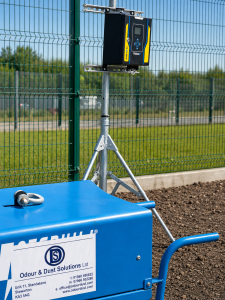
Without proper monitoring, sites risk:
With the right systems in place, monitoring becomes a proactive tool, allowing issues to be identified and resolved before they escalate.
Different environments require different approaches. Most sites will need a combination of monitoring solutions depending on the risks present.
Dust monitoring systems measure airborne particulate levels and help control emissions generated by activities such as crushing, loading, demolition and vehicle movement.
They are particularly important on construction sites and quarries where dust can quickly exceed acceptable limits.
Gas monitoring systems detect hazardous gases such as methane, hydrogen sulphide and carbon monoxide, which are commonly found in confined or high-risk environments.
They are essential in areas such as sewer networks and wastewater treatment facilities, where gas build-up can pose serious safety risks.
Odour monitoring focuses on identifying and managing nuisance smells that can lead to complaints and regulatory attention.
This is especially relevant for waste management and wastewater treatment operations, where odour control is a major concern.
Air quality monitoring systems track overall airborne conditions, combining multiple data points to provide a broader view of site impact.
These systems are often used where there is a need to demonstrate environmental compliance or manage exposure risks.
Modern monitoring systems provide real-time data, allowing site managers to respond immediately to changing conditions.
Instead of relying on periodic checks, real-time monitoring enables continuous oversight, automated alerts and better decision-making.
Some environments require more specialised monitoring due to the nature of the risks involved.
Sewer networks are high-risk environments where gases can accumulate quickly. Monitoring is essential to ensure safe working conditions and prevent dangerous exposure.
Wastewater facilities often combine gas risks, odour issues and environmental compliance requirements. Monitoring systems help maintain control across all these factors.
Not every site needs a permanent monitoring installation.
In many cases, monitoring equipment hire is the most practical and cost-effective solution, particularly for:
ODS offers flexible hire options across a range of monitoring systems, allowing you to get the data you need without long-term commitment.
Selecting the right system depends on several factors:
Getting this right ensures you’re not over-specifying equipment, while still maintaining full control over site conditions.
Effective monitoring is not about collecting data for the sake of it. It’s about using that data to make better decisions on site.
With the right setup, monitoring systems can:
Whether you need short-term monitoring for a specific project or a longer-term solution for ongoing operations, we can help you find the right setup.
From dust and gas monitoring to full real-time systems, ODS provides practical, site-ready solutions designed to perform in demanding environments.
👉 Get in touch today to discuss your monitoring requirements.