
Wind farm construction can involve extensive earthworks, temporary access roads, haul routes and regular movements of heavy vehicles across exposed and often remote locations.
During dry conditions, these activities can generate significant amounts of airborne and surface dust.
ODS provides dust suppression solutions for wind farm developments across Scotland, helping contractors manage dust generated by access roads, construction traffic, excavation, material handling and other site activities.
Based in Ayrshire, we can provide equipment and site-specific dust control solutions for projects throughout Scotland.
Discuss Your Project
Explore Dust Suppression Systems
Wind farm developments can cover large areas and involve several stages of construction, each capable of generating dust.
Common sources include:
Dust generated in one area can also be transported by vehicle movements or wind into surrounding parts of the site.
Because wind farm projects are often spread across large areas, relying on a single dust suppression method may not always be practical.
This should be one of the strongest sections on the page.
Access roads are often one of the main sources of dust during wind farm construction.
Repeated movements from heavy machinery and delivery vehicles can disturb fine surface material and produce substantial dust during dry weather.
Depending on the site, dust suppression options can include:
The most suitable approach depends on factors such as road length, traffic frequency, surface material, water availability and the duration of the project.
View Haul Road Dust Suppression Scotland
Then I would introduce the products without turning this into another product catalogue.
Dust suppression bowsers can provide mobile water application across access roads, haul routes and larger working areas.
They are particularly useful where the dust source moves as construction progresses or where permanent infrastructure is not practical.
Explore Dust Suppression Bowsers Scotland
Temporary or semi-permanent sprinkler systems can provide regular dust suppression along sections of road, compounds and other high-traffic areas.
Automated systems can also reduce the need for repeated manual watering in suitable locations.
Explore Sprinkler Systems Scotland
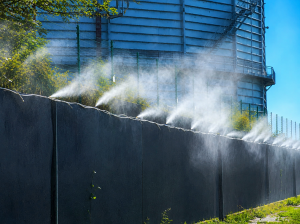
Nozzle systems can be installed around defined dust sources or along specific areas requiring regular treatment.
Different nozzle configurations can be selected depending on the required spray pattern, water pressure and application.
Explore Dust Suppression Nozzles Scotland
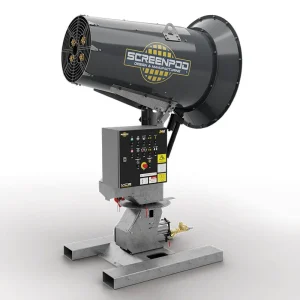
Fog cannons can provide targeted airborne dust suppression around activities including earthworks, material handling and stockpiles.
Mobile units can also provide flexibility as work moves around the site.
Explore Fog Cannons Scotland
This is important because it allows us to connect suppression + monitoring.
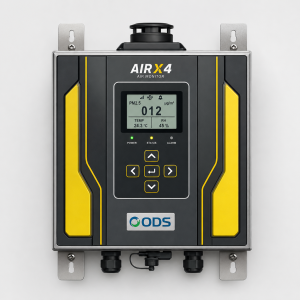
Dust suppression controls the problem.
Monitoring helps site teams understand what is happening.
Dust monitoring equipment can be positioned around construction areas, site boundaries or other sensitive locations to provide information about changing particulate levels.
Monitoring can be particularly useful where construction activities take place close to:
Depending on the system selected, monitoring can provide continuous measurements and alerts when predetermined thresholds are reached.
ExploreDust Monitoring Scotland
Now we get properly Scottish.
Many Scottish wind farm developments are located away from established infrastructure.
That can create practical challenges when implementing dust suppression.
Sites may have:
For these environments, mobile and self-contained dust suppression systems may offer greater flexibility than fixed infrastructure.
ODS can assess the application and help identify equipment suited to the available water supply, power source and operating environment.
I would definitely include this because “just spray more water at it” is not actually a dust-management strategy.
Applying too little water may fail to control dust effectively, while excessive watering can create additional problems including surface deterioration, runoff and unnecessary water consumption.
The objective is to apply water where and when it is required.
Different systems can help target specific areas rather than continuously treating the entire site.
Factors to consider include:
ODS can help determine the most appropriate approach for individual sections of a wind farm construction project.
Wind farm projects change considerably as construction progresses.
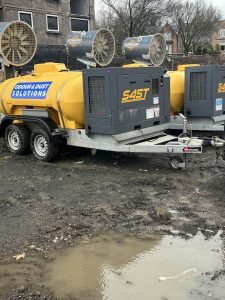
The highest dust-producing activity may move from access-road construction to excavation, foundations, turbine installation or reinstatement.
For that reason, flexible dust suppression equipment can be particularly valuable.
Mobile bowsers, fog cannons and temporary sprinkler or nozzle systems can be relocated as the project develops.
This enables dust control measures to follow construction activity rather than requiring permanent systems across the entire development.
I would make this a visual grid.
Control dust generated by regular construction traffic and plant movements.
Manage dust across heavily trafficked routes transporting stone, aggregate and construction materials.
Reduce airborne dust generated during excavation, grading and ground preparation.
Provide dust suppression around temporary site compounds and working areas.
Control dust released from exposed aggregate, soil and construction materials.
Target dust generated during loading, unloading and movement of bulk materials.
Provide localised dust control around excavation and construction activities.
Manage dust associated with extraction, processing and movement of material within the development.
This section gives us commercial intent.
Wind farm construction is temporary by nature, meaning purchasing permanent dust suppression equipment is not always necessary.
Depending on the equipment required, ODS can provide dust suppression systems for temporary hire as well as purchase.
Hire can be suitable for:
Speak to ODS about your project duration and expected site requirements.
Ask About Dust Suppression Hire
ODS is based in Stewarton, Ayrshire and provides dust suppression equipment and environmental solutions for projects throughout Scotland.
Our systems can support wind farm and renewable energy developments across:
ODS operates from Ayrshire and supports projects throughout Scotland.
Rather than trying to force one piece of equipment onto every application, different suppression systems can be considered according to the actual dust source.
Equipment can be suitable for temporary construction environments where working areas change throughout the project.
Suppression and monitoring systems can be combined where projects require both dust control and greater visibility of site conditions.
Road length, traffic, terrain, water availability and site access can all influence the most appropriate dust suppression strategy.
You do not need to decide whether you need a bowser, sprinkler system, fog cannon or nozzle system before contacting us.
Tell us about:
ODS can then discuss the most appropriate options for the site.
Common sources include access-road traffic, haul roads, excavation, earthworks, aggregate handling, stockpiles and vehicle movements across dry surfaces.
There is no single system suitable for every road. The best approach depends on traffic levels, road material, water availability, road length and site conditions. Options can include bowsers, sprinklers, nozzle systems and road dust suppression treatments.
Yes. Mobile and temporary dust suppression systems can be particularly useful on remote developments where permanent water or power infrastructure is limited.
Yes. Dust monitoring can be used alongside suppression equipment to provide information about particulate levels around construction areas, boundaries and other locations.
Selected ODS equipment can be available for hire, depending on the system and project requirements.
Yes. ODS is based in Ayrshire and supplies environmental and dust suppression solutions for projects across Scotland.