
Dust suppression nozzle systems provide a targeted way to control airborne dust close to the source.
They can be installed around crushers, conveyors, transfer points, loading areas, stockpiles and other defined dust-generating processes where broad-area watering is not the most efficient approach.
ODS supplies dust suppression nozzle systems for sites throughout Scotland, with solutions suitable for quarrying, recycling, construction, demolition, ports and industrial operations.
Based in Ayrshire, we can help identify a system suited to the dust source, process layout, available water pressure and required coverage.
Read more about Dust Control Solutions.
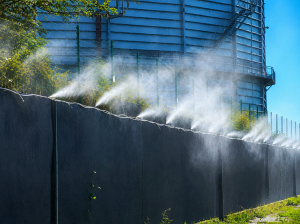
A dust suppression nozzle system uses pressurised water to create a controlled spray or fine mist around a specific source of dust.
The aim is to introduce water droplets where particles are being generated, helping prevent them from spreading into the wider working area.
Nozzle systems can be configured around:
Different nozzle types can produce different spray patterns and droplet sizes depending on the application.
Read more about Nozzle Systems.
Not every dust problem requires large-area watering.
Where dust is generated from a known and relatively fixed source, targeted suppression can provide a more efficient solution.
This can help:
A well-positioned nozzle system can often control dust before it spreads beyond the process that created it.
Crushing operations can produce high levels of airborne dust as material is broken down.
Nozzles can be installed around:
Targeted misting can help suppress dust at these points before particles move into the wider processing area.
For larger or more open crushing zones, fog cannons may also be used to provide broader coverage around the process.
Read more about Fog Cannons Scotland.
Screening equipment can release dust as material moves across screens and separates into different fractions.
Nozzle systems can be positioned around screen decks, feed points and discharge areas to provide localised suppression.
This can be particularly useful where the process remains in a fixed location and consistent treatment is required throughout operating hours.
Conveyors can generate dust where material is transferred, discharged or changes direction.
Nozzles can be positioned around:
Because these sources are clearly defined, targeted suppression can often provide effective control without treating the full length of the conveyor.
Material transfer points are common dust sources across quarrying, recycling and industrial operations.
Dust can be released where material falls from one piece of equipment to another or drops into a hopper, chute or conveyor.
Fine mist nozzles positioned close to the transfer point can help capture particles before they spread.
This can be especially useful where multiple transfer points operate within the same processing line.
Stockpiles can generate dust during loading, unloading, rehandling and dry or windy weather.
Nozzles can be installed around permanent stockpile areas to provide regular treatment.
Depending on the site, they may be used around:
For larger stockpile areas, nozzle systems may be combined with sprinklers or fog cannons.
Read more about Sprinkler Systems Scotland.
Quarries often contain several fixed sources where targeted suppression can be effective.
Applications can include:
Nozzle systems can form part of a wider dust-control approach that also includes bowsers, sprinklers, fog cannons and monitoring.
Read more about Quarry Dust Suppression Scotland.
Waste and recycling facilities can generate dust around crushers, shredders, sorting equipment and material handling zones.
Nozzle systems can be installed around defined dust sources where consistent treatment is required.
Typical applications include:
Where odour is also an issue, atomiser systems may be used alongside nozzle-based dust suppression.
Read more about Waste & Recycling Environmental Solutions Scotland.
Construction and demolition sites can generate dust around cutting, crushing, material handling and waste processing.
Temporary nozzle systems can provide targeted suppression around fixed activities.
Applications can include:
Because active work areas may change, temporary systems can be moved or reconfigured as the project progresses.
Read more about Demolition Dust Suppression Scotland.
Ports and industrial facilities often handle bulk materials through fixed infrastructure.
Nozzle systems can be used around:
These systems can provide regular dust suppression without requiring broad-area water application.
Read more about Ports & Harbours Environmental Solutions Scotland.
Fixed nozzle systems are suitable where dust is repeatedly generated from the same process.
They can be installed around permanent equipment and activated during operation.
Suitable applications include:
Once installed, they can provide consistent treatment with limited operator intervention.
Temporary systems can be used where the dust source is short-term or where operations move around the site.
They may be suitable for:
The system can be removed or repositioned when work changes.
Different dust sources require different droplet characteristics.
Fine mist is typically used where airborne dust needs to be captured close to the source.
Larger droplets may be more appropriate where surface wetting is required.
The correct approach depends on the material, process and desired outcome.
A targeted nozzle system should therefore be selected around the actual dust problem rather than simply choosing the highest available water flow.
Nozzles can produce different spray patterns depending on the application.
Possible configurations can include:
The appropriate pattern depends on where the dust is being generated and how the material moves through the process.
Correct positioning is as important as nozzle selection.
A nozzle system should be positioned close enough to the source to interact with dust before it disperses.
Factors to consider include:
Poor positioning can reduce effectiveness even if the correct nozzle is being used.
Nozzle performance depends on suitable water pressure and flow.
Different nozzle types have different operating requirements.
A system may therefore need:
The available water supply should be assessed before the system is selected.
Water quality can affect nozzle performance.
Fine nozzles can become blocked if the water supply contains suspended solids or debris.
Filtration may therefore be required to maintain consistent operation and reduce maintenance.
The level of filtration needed will depend on the nozzle type and water source.
Nozzle systems can be integrated with automated controls.
Depending on the application, operation can be linked to:
This can help ensure suppression is active when dust is being generated rather than running continuously.
Large processing sites may contain several separate dust sources.
A zoned system can allow individual areas to operate independently.
For example, a quarry may have separate zones for:
This can help reduce unnecessary water use and provide more control over individual processes.
Targeted nozzle systems can help reduce water use compared with broad-area watering.
This is particularly useful where:
Water efficiency can be improved through correct nozzle selection, pressure, positioning and automated control.
Nozzles and fog cannons both use water droplets to suppress airborne dust, but they are suited to different situations.
Nozzles are generally better where:
Fog cannons are generally better where:
Some sites use both systems.
Read more about Fog Cannons Scotland.
Sprinklers are generally designed to wet larger surface areas.
Nozzles are better suited to defined dust sources.
Sprinklers may be used on:
Nozzles may be used around:
Read more about Sprinkler Systems Scotland.
Bowsers are mobile systems designed for broad surface watering.
Nozzle systems are fixed or semi-fixed and provide more targeted treatment.
A large site may therefore use:
Read more about Dust Suppression Bowsers Scotland.
Monitoring can help site teams understand whether targeted suppression is controlling dust effectively.
Dust monitors can be positioned around:
Depending on the system selected, real-time monitoring can help identify when additional suppression may be required.
Read more about Dust Monitoring.
Remote quarries, infrastructure projects and industrial sites can have limited access to mains water and power.
A nozzle system can still be suitable where water storage, pumping and temporary pipework can be provided.
The system should be designed around:
Dust suppression nozzle systems can be configured for both temporary and permanent applications.
Temporary systems may suit:
Permanent systems may suit:
The correct configuration depends on how long the dust source will remain in operation.
ODS is based in Stewarton, Ayrshire and supplies dust suppression nozzle systems for sites throughout Scotland.
We can support projects and operational facilities across:
Different sites require different nozzle configurations.
A fixed quarry crusher may require a very different system from a temporary demolition project, conveyor transfer point or recycling line.
ODS operates from Ayrshire and supplies dust-control solutions throughout Scotland.
Nozzle systems can provide precise suppression around crushers, conveyors, transfer points and other defined sources.
Solutions can be configured for both short-term projects and permanent operations.
Nozzles can be combined with fog cannons, sprinklers, bowsers and monitoring where a site contains different types of dust source.
Water pressure, process layout, dust source and required coverage are considered when selecting a suitable system.
If crushers, conveyors, transfer points or other processing equipment are generating dust on your site, ODS can help identify a suitable nozzle system.
Tell us where the dust is being generated, how the process operates and what water supply is available.
We can discuss fixed, temporary and automated nozzle systems suited to your application.
They are used to apply targeted water spray or fine mist around defined dust sources such as crushers, conveyors, transfer points and hoppers.
Yes. Nozzles can be installed around crusher feed and discharge points to help suppress airborne dust.
Yes. They can be positioned around conveyor loading, transfer and discharge points.
It depends on the application. Nozzles are usually better for fixed and defined sources, while fog cannons provide broader coverage.
Yes. Targeted suppression can help reduce unnecessary water application compared with broad-area watering.
Yes. Depending on the installation, systems can be linked to timers, equipment operation or other controls.
Fine nozzles may require filtration depending on the water quality and nozzle design.
Yes. Temporary systems can be used for construction, demolition and other short-term operations.
Yes. Monitoring can help provide greater visibility of changing dust levels while nozzles provide targeted suppression.
Yes. ODS is based in Ayrshire and supplies dust suppression systems for sites throughout Scotland.