
Dust suppression bowsers provide a practical way to control surface dust across haul roads, access roads, construction sites, quarries and large industrial areas.
By applying water directly to dry surfaces, bowsers can help reduce the amount of dust generated by vehicle movements, plant activity and exposed ground.
ODS supplies dust suppression bowser solutions for sites throughout Scotland, with options suitable for temporary projects, remote locations and longer-term operations.
Based in Ayrshire, we can help identify a suitable system according to the site size, road length, traffic levels, water availability and operating conditions.
Read more about Dust Control Solutions.
A dust suppression bowser is a mobile water tank fitted with equipment designed to distribute water across roads, yards and other dusty surfaces.
Depending on the configuration, a bowser may use:
The main purpose is to keep surface material sufficiently damp to reduce the amount of dust released by traffic and site activity.
Dust suppression bowsers are particularly useful where fixed sprinkler infrastructure is not practical or where dust-generating areas change over time.
Bowsers can be used across a wide range of industries and project types.
Typical applications include:
They are especially useful where large areas need to be treated but permanent pipework or sprinkler systems would be difficult to install.
Haul roads are one of the most common applications for dust suppression bowsers.
Heavy plant, dump trucks and HGVs can repeatedly disturb dry road material, producing airborne dust throughout the working day.
A bowser can travel directly along the active route and apply water where it is needed.
This provides flexibility where:
Application frequency can then be adjusted according to weather, traffic levels and road condition.
Read more about Haul Road Dust Suppression Scotland.
Construction projects often involve temporary roads, earthworks, excavation and large areas of exposed ground.
As the site develops, active working areas can move significantly.
A mobile bowser can therefore provide a practical alternative to installing permanent watering systems across the entire project.
Typical applications include:
Bowsers can also be used alongside fog cannons, sprinklers and nozzle systems where different dust sources require different forms of control.
Read more about Construction Dust Control Scotland.
Wind farm projects can involve extensive temporary roads and long distances between working areas.
Heavy construction traffic can generate significant road dust, particularly during prolonged periods of dry weather.
Mobile bowsers are well suited to these environments because they can move between different sections of the project without relying on permanent watering infrastructure.
Applications can include:
Read more about Wind Farm Dust Suppression Scotland.
Quarry haul roads can experience constant traffic from dump trucks, loaders and other heavy plant.
Repeated vehicle movements can disturb fine surface material and create continuous dust generation during dry conditions.
Bowsers can provide mobile watering across:
For permanent sections of road, sprinkler systems may also be considered alongside mobile bowser use.
Read more about Quarry Dust Suppression Scotland.
Waste and recycling facilities can generate road and yard dust through regular HGV and plant movements.
Bowsers can be used to control dust across larger outdoor areas where fixed sprinklers are not available or where activity changes during the day.
Applications can include:
Read more about Waste & Recycling Environmental Solutions Scotland.
Industrial sites with large yards, open storage areas or frequent vehicle traffic can develop persistent surface dust.
A mobile bowser allows operators to treat specific areas as required without installing permanent infrastructure.
This can be particularly useful on:
Read more about Ports & Harbours Environmental Solutions Scotland.
The bowser carries a supply of water which is distributed across the surface using pumps and spray equipment.
The objective is to maintain enough moisture in the surface material to prevent fine particles becoming airborne.
The amount of water required will depend on:
Applying too little water may provide only temporary suppression.
Applying too much can create operational problems.
More water does not always mean better dust suppression.
Excessive watering can lead to:
The aim is to apply enough water to reduce dust while maintaining a safe and usable road surface.
A controlled spray system can help provide more consistent application than simply flooding the road.
Spray bars are commonly used to distribute water evenly across the road surface.
Depending on the system, spray width and flow can be configured according to the vehicle and application.
A suitable spray pattern helps:
The configuration should match the width of the route and the operating speed of the bowser.
Some sites require more flexibility than a single rear spray bar can provide.
Side sprays can help target:
Combining different spray positions can allow one bowser to treat a wider range of site conditions.
A hose reel can provide additional flexibility where direct manual application is required.
This can be useful for:
A bowser can therefore provide both broad surface watering and more targeted application depending on its configuration.
Bowsers and sprinkler systems both provide surface dust control, but they suit different environments.
A bowser may be more appropriate where:
A sprinkler system may be more suitable where:
Some sites use both systems.
A quarry, for example, may have sprinklers on a permanent main route while using bowsers on temporary or changing roads.
Read more about Sprinkler Systems.
A bowser and fog cannon perform different functions.
A bowser is generally used to control dust at surface level by wetting roads, yards and exposed ground.
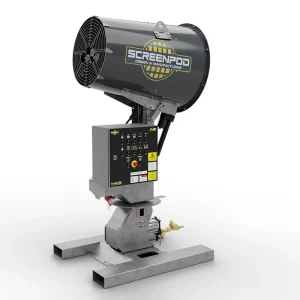
A fog cannon is primarily used to suppress airborne dust around activities such as crushing, demolition and material handling
A large site may therefore use:
Read more about Fog Cannons Scotland.
Nozzle systems are normally installed around fixed or defined dust sources.
Bowsers are mobile and better suited to larger surface areas.
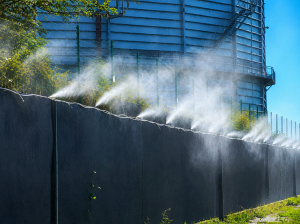 Nozzles may be used around:
A bowser may then treat the roads connecting those operational areas.
Read more about Nozzle Systems.
The effectiveness of a bowser depends partly on access to a suitable water supply.
Sites should consider:
On large or remote sites, refill logistics can significantly affect how efficiently a bowser operates.
A larger tank may reduce refill frequency, but vehicle size, access and ground conditions also need to be considered.
Many Scottish infrastructure, wind farm and quarry projects operate in remote areas.
These sites may have:
Mobile dust suppression bowsers can provide greater flexibility because they do not rely on fixed sprinkler infrastructure along the entire route.
Water supply and refill locations should still be considered when planning the system.
Dust generation can change considerably throughout the year.
Wet weather can naturally reduce road dust, while prolonged dry periods can create significant problems on previously manageable surfaces.
Bowsers can provide additional dust-control capacity when conditions require it.
This makes them useful for sites that experience seasonal rather than permanent dust problems.
Dust monitoring can help site teams understand when particulate levels are increasing and whether additional road treatment may be required.
Monitoring equipment can be positioned around:
Depending on the system selected, real-time measurements and alerts can provide greater visibility of changing conditions.
Read more about Dust Monitoring.
Many projects only require a bowser for a limited period.
Hire can be suitable for:
Hiring can allow sites to access dust suppression equipment without purchasing equipment for a temporary requirement.
Selected ODS systems can be available for hire depending on the required specification and availability.
Some sites require road dust suppression throughout regular operations.
Quarries, recycling facilities and industrial sites may therefore prefer longer-term or permanent equipment.
The most suitable system will depend on:
ODS can help identify equipment suited to the operational requirement.
ODS is based in Stewarton, Ayrshire and supplies dust suppression solutions for projects and operational sites throughout Scotland.
We can support customers across:
The right bowser depends on the site rather than simply its location.
A short urban construction route may require a very different system from a remote wind farm or large quarry with several kilometres of internal road.
ODS operates from Ayrshire and supports dust-control projects throughout Scotland.
Bowsers provide flexible suppression where road layouts, working areas and operating requirements change.
Bowsers can be combined with fog cannons, sprinkler systems, nozzles and monitoring where several sources of dust exist across the same site.
Equipment can be suitable for temporary construction projects, seasonal requirements and permanent operational sites.
Road length, surface material, traffic, available water and site access are all considered when selecting the most appropriate solution.
If haul roads, access routes, construction traffic or plant movements are generating dust on your site, ODS can help identify a suitable mobile dust suppression solution.
Tell us about the road length, surface type, traffic levels, available water and the size of the site.
We can discuss the available equipment and help identify a bowser or alternative dust-control system suited to your application.
A dust suppression bowser is a mobile water tank fitted with spray equipment designed to apply water across roads, yards and other dry surfaces to reduce dust generation.
They are commonly used on construction sites, quarries, wind farms, haul roads, recycling facilities, industrial sites and infrastructure projects.
Yes. Mobile bowsers are particularly useful for long or changing haul roads where permanent sprinkler infrastructure is not practical.
There is no fixed interval. Frequency depends on weather, traffic, road material, site conditions and how quickly the road surface dries.
It depends on the application. Bowsers provide greater mobility, while sprinklers can be better suited to permanent areas requiring frequent automated watering.
Yes. Bowsers can control surface dust while fog cannons suppress airborne dust around processing, demolition or material-handling activities.
Yes. Excessive watering can create mud, standing water, rutting, slippery surfaces and unnecessary runoff.
Yes. They are particularly useful where fixed watering infrastructure is unavailable, although access to suitable refill points still needs to be considered.
Selected ODS dust suppression equipment can be available for temporary hire depending on specification and availability.
Yes. ODS is based in Ayrshire and supplies dust-control solutions for sites throughout Scotland.