
Odour problems can arise across waste, recycling, industrial, wastewater and processing sites, particularly where materials are received, stored, handled or treated.
ODS provides odour control systems for sites throughout Scotland, with solutions designed around the source of the problem, site layout and operating conditions.
Based in Ayrshire, we supply fixed, mobile and temporary odour-control systems that can be used around reception areas, processing zones, storage areas, boundaries and other locations where nuisance odour needs to be managed.
Read more about Odour Issues & Control Solutions.
An odour control system is designed to reduce nuisance odours by treating the air close to the source or along the route where odour is likely to travel.
Depending on the application, systems can use:
The most appropriate system depends on where the odour is generated and how it moves through the site.
Odour issues can develop in a wide range of environments.
Typical sources include:
Some sites have one clearly defined odour source, while others may experience several sources across a larger operational area.
Waste and recycling facilities can generate odour during reception, storage, sorting, handling and processing.
Depending on the operation, odour may be concentrated inside a reception hall or spread across larger external working areas.
Suitable solutions can include:
The system should be positioned around the actual source rather than relying on broad treatment across the entire site.
Read more about Waste & Recycling Environmental Solutions Scotland.
Waste reception and tipping halls can produce concentrated odour as materials arrive and are moved around the facility.
Fixed nozzle or atomiser systems can provide regular treatment around:
Positioning the system close to the source can help reduce odour before it spreads into other parts of the facility.
Atomiser systems create fine droplets that can be dispersed across an area where odour is being generated.
They can be used in both indoor and outdoor applications.
Suitable locations may include:
Static atomisers can provide continuous coverage around fixed sources, while mobile units can be repositioned where operational requirements change.
Read more about Atomiser Systems.
Nozzle systems can provide targeted treatment around defined sources.
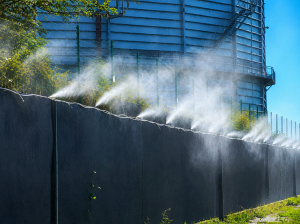 They may be positioned around:
Fine mist can be directed towards the area where odour is being released, helping reduce unnecessary treatment elsewhere.
Read more about Nozzle Systems.
Some sites experience odour that moves away from the source and towards neighbouring areas.
Perimeter systems can provide an additional layer of control around the site boundary.
These may be used around:
Perimeter treatment should not replace source control where the source can be treated directly, but it can support a wider odour-management strategy.
Composting operations can generate odour during material reception, turning, processing and storage.
Different parts of the operation may require different forms of treatment.
Applications can include:
Mobile and fixed atomiser systems can provide flexibility where activity changes across the site.
Wastewater and sludge handling can generate persistent odours from treatment, storage and transfer activities.
Potential sources include:
Targeted misting or atomisation can be used around suitable applications where odour needs to be treated close to the source.
Industrial processes can create odour from production, storage, waste handling or material treatment.
The source may be localised around a specific process or distributed across a larger working area.
ODS can provide odour-control systems for applications including:
The solution should reflect the source, airflow and operating environment.
Ports and harbour sites can include waste handling, storage, processing and bulk material operations.
Where odour is generated, nozzle and atomiser systems can provide targeted treatment around the relevant activity.
Read more about Ports & Harbours Environmental Solutions Scotland.
Enclosed buildings can trap odour and allow it to build up around operational areas.
Indoor treatment can be useful around:
System design should consider:
A targeted system can help treat the source without unnecessarily saturating the entire building.
Outdoor odour is influenced by weather and air movement.
Wind direction, site layout and source location can all affect where odour travels.
Outdoor control can involve:
The system may need to be adjusted according to operating conditions and prevailing weather.
Mobile systems provide flexibility where odour sources move or where treatment is only required temporarily.
They can be useful for:
Mobile units can be repositioned as site requirements change.
Fixed systems are more suitable where odour is repeatedly generated from the same area.
Applications can include:
Fixed systems can also be connected to automated controls where continuous or scheduled operation is required.
Automated operation can help provide more consistent treatment.
Depending on the system, controls can include:
Automation can help ensure treatment is provided when it is needed rather than running continuously regardless of site activity.
Larger sites may benefit from separate treatment zones.
For example, a waste site may operate individual zones around:
This allows treatment to be focused on the areas generating odour at a particular time.
Monitoring can help provide greater visibility of environmental conditions around the site.
Depending on the equipment and application, monitoring can support:
Monitoring can be used alongside active odour-control systems to provide additional information about changing conditions.
Read more about Odour Issues & Control Solutions.
Where sites are located close to residential or commercial areas, boundary monitoring can help provide context around environmental conditions.
Potential monitoring locations may include:
Monitoring locations should be selected according to the site layout and likely movement of odour.
When an odour complaint is received, understanding what was happening at the time can be difficult without supporting information.
Operators may need to consider:
Monitoring and operational data can help provide useful context when investigating reported issues.
Weather can influence how odour moves.
Wind direction and speed can determine where emissions travel, while temperature and humidity can also affect conditions.
Outdoor odour-control systems may therefore need to be repositioned or adjusted as conditions change.
This is particularly important on exposed industrial, waste and rural sites.
There is no single system suitable for every odour problem.
The right approach depends on:
A system should be selected around the actual operational conditions rather than simply treating the entire site in the same way.
Some sites experience both odour and dust.
Waste, recycling and industrial facilities may need separate or combined systems depending on the source.
For example:
Using different systems for different environmental issues can provide more effective control than trying to use one technology for everything.
Read more about Dust Control Solutions.
Temporary treatment may be suitable for:
Mobile systems can provide additional control without requiring permanent installation.
Permanent systems may be appropriate where odour is generated continuously from an established process.
Applications can include:
A permanent system can be designed around the site layout and ongoing operational requirements.
ODS is based in Stewarton, Ayrshire and provides odour-control solutions for sites throughout Scotland.
We can support operations across:
The right system depends on the source and site conditions.
A waste reception hall may require a very different approach from an outdoor composting area, wastewater site or industrial process.
ODS operates from Ayrshire and provides environmental-control solutions throughout Scotland.
Solutions can be configured for permanent processes or temporary and changing operations.
Nozzle and atomiser systems can be positioned around defined sources rather than treating areas unnecessarily.
ODS supplies dust suppression, odour control and environmental monitoring systems, allowing several environmental issues to be considered together.
Source location, site layout, weather exposure, surrounding areas and operating conditions are considered when identifying a suitable system.
If nuisance odour is affecting your waste, recycling, industrial or processing site, ODS can help identify a suitable control system.
Tell us where the odour is being generated, how the site operates and whether the issue is concentrated around a specific process or wider area.
We can discuss fixed, mobile and temporary odour-control solutions suited to your application.
An odour control system uses technologies such as fine mist, atomisation or targeted nozzle systems to treat nuisance odours close to the source or along the route where they travel.
Common applications include waste management, recycling, composting, wastewater, industrial processing and material storage.
Yes. Fixed nozzle and atomiser systems can be configured around indoor reception, processing and storage areas.
Yes. Mobile atomisers, perimeter systems and fixed misting can be used around suitable outdoor applications.
Yes. Depending on the system, operation can be controlled using timers, zones, remote activation or other controls.
Yes. Different systems can be used together where a site experiences both dust and odour issues.
Yes. Mobile and temporary systems can be used for short-term or changing operational requirements.
Yes. Monitoring can provide additional information about environmental conditions around operational areas and site boundaries.
Yes. Waste reception, storage, processing and handling areas are common applications for odour-control systems.
Yes. ODS is based in Ayrshire and provides odour-control solutions for sites throughout Scotland.