
Fog cannons provide a flexible way to suppress airborne dust across construction, demolition, quarrying, recycling and industrial sites.
By projecting fine water droplets into the air, fog cannons can target dust close to where it is being generated and help reduce its movement across the wider working area.
ODS supplies fog cannon systems for sites throughout Scotland, with options suitable for temporary projects, mobile applications and longer-term installations.
Based in Ayrshire, we work with businesses and contractors to identify equipment suited to the size of the site, dust source, available water supply and operating conditions.
Read more about Dust Control Solutions.
A fog cannon, sometimes referred to as a dust cannon, mist cannon or water mist cannon, uses pressurised water and airflow to create and project fine droplets across a defined area.
Rather than simply wetting the ground, the system is designed primarily to target airborne dust.
The droplets are dispersed through the air towards the area where dust is being generated.
Fog cannons can be particularly useful where the dust source:
Different cannon sizes and configurations can provide different throw distances, spray patterns and water requirements.
Read more about Dust Cannons.
Airborne dust can be difficult to control once it has dispersed across a large area.
Fog cannons aim to introduce fine water droplets close to the source while particles are still concentrated.
The mist interacts with airborne particles, helping increase their weight and encouraging them to settle rather than continuing to travel through the air.
The effectiveness of the system depends on factors including:
Correct positioning is therefore important.
Simply pointing a cannon towards a dusty area does not automatically produce the best result. The equipment needs to be located and operated according to how dust is being generated and moving around the site.
Mobile fog cannons provide flexibility where dust-generating activities move around a site.
They can be repositioned as work progresses and deployed where suppression is required most.
Mobile systems can be useful for:
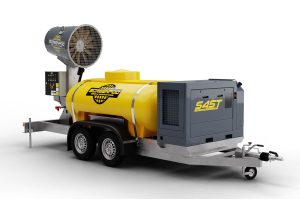
This makes them particularly suitable for sites where installing permanent suppression infrastructure would be impractical.
Mobile units can also provide additional capacity during periods of particularly dry weather or increased activity.
Where dust is repeatedly generated in the same location, a fixed fog cannon may provide a more permanent solution.
Fixed systems can be positioned around established operating areas such as:
Depending on the application, fixed systems may also be incorporated into automated dust-control arrangements.
The choice between fixed and mobile equipment should reflect how consistently the dust source remains in one location.
Construction projects can create airborne dust from excavation, earthworks, stockpiles, material handling and vehicle movements.
Because the active working area often changes as the project progresses, mobile fog cannons can provide a practical way to move suppression around the site.
Applications can include:
Fog cannons can also be used alongside bowsers, sprinklers and nozzle systems where different parts of the site require different forms of dust control.
Read more about Construction Dust Control Scotland
Demolition can generate concentrated airborne dust very quickly.
Concrete breaking, structural demolition, crushing and debris handling can all produce visible dust that moves away from the immediate working area.
Fog cannons are particularly useful in these environments because they can provide wide-area misting and can be repositioned as demolition progresses.
They may be used around:
Where the dust source is smaller or more defined, nozzle systems may be used alongside the cannon to provide more targeted suppression.
Read more about Demolition Dust Suppression Scotland.
Quarry operations can generate airborne dust through crushing, screening, loading, stockpiles and aggregate handling.
Fog cannons can provide broader coverage around processing or storage areas where fixed nozzles alone may not be sufficient.
Typical quarry applications include:
Mobile units can be moved between operational areas, while fixed systems may suit permanent processing installations.
Read more about Quarry Dust Suppression Scotland.
Waste and recycling facilities can generate dust during crushing, sorting, shredding, stockpiling and material handling.
Where working areas change frequently, mobile fog cannons can offer greater flexibility than permanently installed misting systems.
They may be used around:
For more defined dust sources, fog cannons can be combined with fixed nozzles or atomisation systems.
Read more about Waste & Recycling Environmental Solutions Scotland.
Bulk material handling can generate airborne dust during loading, unloading, storage and transfer.
Fog cannons can provide flexible suppression around large or changing operational areas at ports, terminals and industrial sites.
Potential applications include:
Mobile systems can be particularly useful where operational areas change according to the material being handled.
Read more about Ports & Harbours Environmental Solutions Scotland.
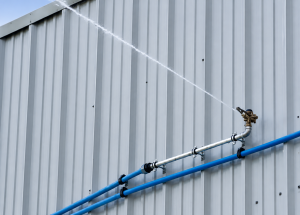 Stockpiles can release dust when material is loaded, unloaded or moved, as well as during dry and windy conditions.
Fog cannons can be positioned around active stockpile areas to provide mist coverage where dust is being released.
The ability to reposition mobile equipment can be useful where stockpile locations change over time.
For permanent stockpile areas, sprinklers or fixed nozzle systems may also be considered depending on the material and required coverage.
Read more about Sprinkler Systems.
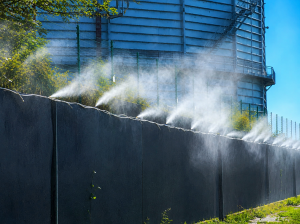
Crushing and screening can generate significant dust close to processing equipment.
A fog cannon can provide broader mist coverage around the working area, particularly where dust escapes from several points.
However, where the source is very localised, targeted nozzles may provide more direct suppression.
For some sites, the most effective approach is therefore a combination of:
Read more about Nozzle Systems.
Fog cannons and nozzle systems both use water droplets to control airborne dust, but they are suited to different applications.
A fog cannon may be more appropriate where:
A nozzle system may be more appropriate where:
On larger sites, both systems may be used together.
Read more about Nozzle Systems.
Sprinklers are generally better suited to surface dust over roads, yards and larger ground areas.
Fog cannons are primarily designed to target airborne particles.
For example, a quarry may use:
Selecting equipment according to the source can provide more effective control than attempting to use one system for every application.
Read more about Sprinkler Systems.
Fog cannons are generally not the first choice for treating the entire surface of a long haul road.
Surface watering using bowsers, sprinklers or road-treatment systems is usually more appropriate for controlling dust generated by vehicle movements.
A fog cannon may, however, provide additional airborne dust suppression around specific high-activity locations such as junctions, loading areas or processing zones.
Read more about Haul Road Dust Suppression Scotland.
Fog cannons are available in different sizes and configurations.
Choosing equipment should involve more than simply selecting the unit with the longest throw.
Factors to consider include:
A larger cannon is not automatically the most appropriate solution.
A smaller unit positioned correctly may provide better control for a defined working area than a larger system operating too far from the dust source.
Equipment position can significantly affect performance.
Where possible, the cannon should be positioned so the mist interacts with the dust plume before the particles disperse.
Considerations can include:
Because site conditions can change, mobile systems can be repositioned when required.
Outdoor dust generation can change considerably according to weather.
Periods of rain may naturally reduce surface dust, while prolonged dry conditions can increase dust from stockpiles, material handling and vehicle movements.
Wind can also influence the direction and distance that airborne material travels.
Fog cannon position and operation may therefore need to be adjusted according to current site conditions.
This flexibility can be particularly important on exposed quarry, construction, port and rural sites.
Effective dust suppression is not simply about applying the maximum possible amount of water.
The aim is to use an appropriate droplet size and application rate for the dust being controlled.
Excessive water can create:
Selecting the right equipment and positioning it correctly can help focus treatment where it is actually required.
Dust monitoring can be used alongside fog cannons to provide greater visibility of changing particulate levels.
Monitoring equipment may be positioned around:
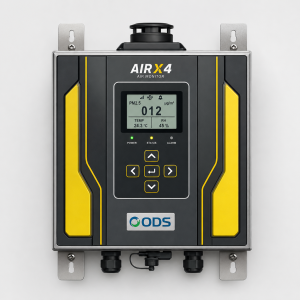
Depending on the monitoring system selected, real-time measurements and alerts can help site teams identify when conditions change and when additional suppression may be required.
Read more about Dust Monitoring.
Many dust-control requirements are temporary.
Construction and demolition projects may need suppression for a limited period, while quarries and industrial sites may require additional equipment during particularly dry conditions or temporary operations.
Fog cannon hire can be suitable for:
Selected ODS equipment can be available for hire depending on the required system and availability.
Where the same process generates dust continuously, purchasing or permanently installing a system may be more appropriate.
Permanent applications can include:
The appropriate configuration will depend on how the site operates and whether fixed or mobile coverage is required.
ODS is based in Stewarton, Ayrshire and supplies dust suppression equipment for projects and operational sites throughout Scotland.
We can support businesses and contractors across:
Different sites require different equipment.
A compact urban demolition project may need a very different fog cannon from a large quarry, recycling yard or remote construction operation.
ODS operates from Ayrshire and provides dust-control solutions throughout Scotland.
Fog cannons can be selected for temporary mobile applications or longer-term installations.
Fog cannons can be used alongside nozzles, sprinklers, bowsers and monitoring equipment where the site has several different dust sources.
Selected equipment can be available for temporary hire or longer-term use depending on the application.
Throw distance, site size, water supply, wind exposure and dust source are all considered when identifying an appropriate solution.
If airborne dust is affecting your construction site, demolition project, quarry, recycling facility or industrial operation, ODS can help identify a suitable fog cannon or alternative dust suppression system.
Tell us where the dust is being generated, the approximate size of the working area and what water and power are available on site.
We can discuss the available options and identify equipment suited to your application.
A fog cannon uses airflow and pressurised water to project fine droplets towards an area where airborne dust is being generated.
The terms fog cannon, dust cannon and mist cannon are often used for similar types of dust suppression equipment. Individual systems can differ in droplet size, throw distance and configuration.
Fog cannons can be used in construction, demolition, quarrying, recycling, bulk material handling, ports and industrial applications.
Yes. Mobile fog cannons can be particularly useful for demolition because they can provide broad dust suppression and be repositioned as work progresses.
Yes. Applications can include crushing, screening, stockpiles, loading and aggregate handling.
Fog cannons can control airborne dust around specific areas, but bowsers or sprinkler systems are generally more appropriate for treating the surface of long haul roads.
Fog cannons project mist across a larger area and can be mobile. Nozzle systems are generally installed closer to fixed or defined dust sources.
Yes. Monitoring systems can provide information about changing particulate levels while fog cannons provide active dust suppression.
Selected ODS fog cannon systems can be available for temporary hire depending on equipment requirements and availability.
Yes. ODS is based in Ayrshire and supplies dust suppression solutions for sites throughout Scotland.