
Quarrying operations can generate dust across almost every stage of material extraction, processing and movement. Crushing, screening, haul roads, stockpiles, conveyors and heavy vehicle traffic can all contribute to airborne and surface dust across a site.
ODS provides quarry dust suppression and environmental monitoring solutions for sites throughout Scotland.
Based in Ayrshire, we supply mobile, temporary and fixed systems designed around the individual application, from targeted misting around crushers and transfer points to large-area road dust suppression and environmental monitoring.
The most effective approach depends on where the dust is being generated, how the material is being processed, site layout, water availability and the way the quarry operates.
Dust generated within a quarry rarely comes from one source alone.
A single site may need to manage dust from processing equipment while simultaneously controlling vehicle-generated dust across several kilometres of internal road.
Typical sources include:
This means quarry dust control is often most effective when different suppression methods are used for different areas of the site.
A fog cannon may work well around a large processing area, while a bowser or sprinkler system may be more appropriate for an internal road.
Nozzle systems can then provide targeted control around crushers, conveyors or transfer points.
Crushing and screening can produce concentrated levels of airborne dust as stone and aggregate are broken down, separated and transferred between different stages of processing.
Where dust is generated at a defined source, applying suppression as close as possible to that source can help prevent it dispersing throughout the wider site.
Depending on the equipment and processing layout, suitable options can include:
Nozzle systems can be positioned close to crushers, screens, discharge points and transfer areas to provide targeted coverage without unnecessarily treating the entire processing zone.
For larger or more open operations, fog cannons can provide broader coverage and help capture airborne particles as they move away from the source.
Internal roads are often one of the largest and most persistent sources of dust within quarry operations.
Dump trucks, loaders, HGVs and other heavy vehicles repeatedly disturb fine material on unsealed road surfaces.
During prolonged dry conditions, each vehicle movement can lift dust back into the air, creating a continuous source throughout the working day.
Haul road dust suppression can involve:
The best method depends on factors including road length, traffic frequency, surface material, available water and how quickly the road dries.
Long or constantly changing routes may favour mobile systems, while regularly trafficked permanent routes may benefit from fixed or automated suppression.
Water remains one of the most widely used methods of controlling road dust, but effective suppression is not simply a question of applying as much water as possible.
Too little water can evaporate quickly and provide only short-lived control.
Too much can create:
The aim is to maintain enough surface moisture to reduce dust generation without oversaturating the road.
Application frequency may therefore need to change according to traffic, weather, road condition and operating intensity.
Where water availability is limited, more targeted application or alternative road dust-control methods may also be considered.
Aggregate and other loose materials stored in open stockpiles can become significant sources of dust.
Dust may be released when material is:
Suppression systems can be positioned around stockpile areas to reduce airborne material during handling and periods of increased dust generation.
Depending on the size and layout of the stockpile area, systems may include Sprinkler, fixed misting lines, nozzles or mobile fog cannons.
Mobile equipment can be particularly useful where stockpile locations or operating areas change over time.
Conveyors and material transfer points can generate significant dust where aggregate falls from one level to another or changes direction.
Because these sources are usually well defined, targeted dust suppression can often be highly effective.
Nozzle or fine-mist systems can be positioned close to:
Targeting the source allows the system to treat the dust before it spreads across a larger area.
It can also reduce unnecessary water application compared with attempting to suppress the same dust after it has dispersed.
Fog cannons are designed to project fine water droplets across an area where airborne dust is being generated.
They can be useful for quarry applications where the source is larger, variable or difficult to contain using fixed nozzles alone.
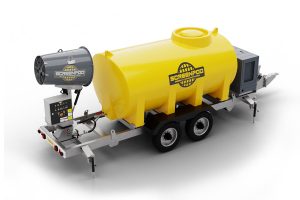 Typical applications include:
Mobile fog cannons can be repositioned as quarry activity changes, while fixed units may be suitable around permanent processing operations.
The appropriate throw distance, water consumption and droplet characteristics depend on the individual application.
View all ScreenPod Dust Cannon
Mobile dust suppression bowsers provide a practical way to treat roads, yards and large operational areas.
They can be particularly useful where:
Different bowser configurations can provide varying spray widths and application rates depending on the size of the site and the level of treatment required.
For sites with extensive haul routes, mobile watering can form an important part of the overall dust-control strategy.
Read about Bowsers
Fixed or temporary sprinkler systems can provide regular dust suppression across defined areas of a quarry.
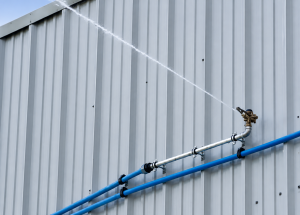
They may be suitable for:
Sprinklers can reduce the need for repeated manual watering where the same area requires treatment throughout the day.
Automated operation may also allow watering schedules to be adjusted according to operating conditions.
Temporary systems can be repositioned if site activity changes.
Read more about Sprinkler Systems
Nozzle systems provide targeted dust control where the source and required coverage are clearly defined.
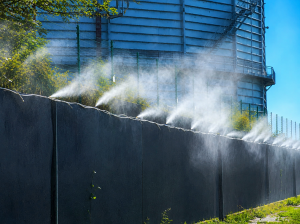 Applications can include:
Different nozzle types produce different droplet sizes and spray patterns, allowing systems to be configured around the individual process.
Targeted suppression can be especially useful where excessive water could affect the material or process.
Read more about Nozzle systems
Dust suppression controls the source, while monitoring helps site operators understand what is happening across and around the quarry.
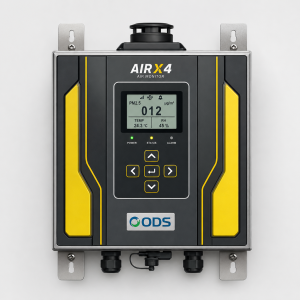
Dust monitoring equipment can be positioned at strategic locations including:
Depending on the monitoring system selected, measurements can be collected continuously and used to identify changing particulate levels.
Real-time alerts can also help site teams respond when conditions change and additional suppression may be required.
Monitoring and suppression can therefore work together as part of a wider dust-management approach.
Dust does not always remain within the area where it is generated.
Wind direction, vehicle movements and site topography can influence how airborne material travels across and beyond a quarry.
Locations requiring particular attention may include:
Where boundary dust is a concern, combining targeted source suppression with environmental monitoring can provide a clearer understanding of changing conditions.
The location of equipment should reflect both the source of the dust and the areas that need protection.
Not every quarry operates in the same way.
The appropriate dust-control system can vary according to the material being handled, extraction method and processing requirements.
Hard rock operations may generate dust through drilling, blasting, crushing, screening and extensive aggregate handling.
Processing areas and haul roads can therefore require different forms of suppression.
Fine materials can become airborne during excavation, screening, movement and storage, particularly during dry and windy conditions.
Targeted misting and road dust control may both form part of the solution.
Sites focused on crushing, screening and handling aggregates may require concentrated suppression around processing equipment, conveyors and loading areas.
Where equipment or working zones move, mobile suppression systems can provide greater flexibility than permanent installations.
Dust levels can change significantly according to weather conditions.
Following wet weather, road surfaces and stockpiles may remain naturally damp.
During sustained periods of dry or windy weather, the same activities may generate considerably more airborne dust.
A dust-control strategy therefore needs enough flexibility to respond to changing conditions rather than operating at the same intensity throughout the year.
This may involve:
Flexible systems allow operators to increase or reduce suppression according to actual site conditions.
Large quarry sites can require substantial volumes of water if suppression is applied inefficiently.
More targeted dust control can help focus available water where it provides the greatest benefit.
This may include:
The objective is effective control rather than simply maximum water application.
Some Scottish quarries operate in rural or remote locations where water, power and other infrastructure may be limited.
This can make the selection of dust-control equipment particularly important.
Site considerations may include:
Mobile and self-contained equipment can provide greater flexibility where permanent infrastructure is impractical.
Where fixed systems are required, the available water and power supply can be considered as part of the system design.
Quarry dust-control requirements can range from occasional seasonal problems to permanent process-related dust.
ODS can provide systems suited to different operational requirements.
Mobile fog cannons and bowsers can be moved around the quarry according to changing activity.
Temporary sprinklers and nozzle lines may be suitable where dust control is required for a limited period or in a changing operational area.
Permanent misting, nozzle and sprinkler systems can provide consistent control around established processes and routes.
A combination of these approaches may be appropriate across larger quarry operations.
Not every dust-control requirement justifies purchasing permanent equipment.
Temporary hire may be suitable where additional suppression is required for:
Longer-term or permanent installations may be more appropriate where the same source requires continuous dust control.
Selected ODS systems can be provided for hire or purchase depending on the equipment and application.
Effective quarry dust management typically involves more than installing one piece of equipment.
The source, operating pattern and surrounding environment all need to be considered.
A site assessment may consider:
This helps identify whether the most appropriate solution is localised misting, large-area suppression, road watering, monitoring or a combination of systems.
ODS is based in Stewarton, Ayrshire and provides quarry dust suppression and environmental monitoring solutions throughout Scotland.
We can support quarry and aggregate operations across the Central Belt as well as more rural and remote locations.
Coverage includes projects and sites across:
Operating conditions can differ considerably between an established quarry close to a major transport network and a remote Highland extraction site.
Equipment selection should therefore reflect the conditions of the individual operation rather than relying on a standard solution.
ODS operates from Ayrshire and supports quarry, construction and industrial sites throughout Scotland.
Different dust sources require different methods of control. ODS supplies fog cannons, bowsers, sprinkler systems, nozzles and environmental monitoring equipment.
Dust control can address both vehicle-generated surface dust and airborne dust produced by processing equipment.
Equipment can be selected for temporary, mobile or permanent applications depending on operational requirements.
Monitoring systems can be combined with suppression equipment to provide greater visibility of changing conditions around the site.
Quarry layout, processing operations, road condition, water availability and site infrastructure can all influence the most appropriate system.
If dust from crushing, screening, haul roads, stockpiles or material handling is creating a problem on your site, ODS can help identify suitable suppression and monitoring options.
Tell us where the dust is being generated, how the quarry operates and what controls are already in place.
We can discuss the available systems and identify an approach suited to the site, whether you require targeted dust suppression around a specific process or wider control across roads and operational areas.
Common sources include crushing, screening, haul roads, vehicle movements, conveyors, transfer points, stockpiles, drilling and material handling.
There is no single system suitable for every quarry. Fog cannons and nozzle systems may be appropriate around crushing and processing areas, while bowsers and sprinklers are often better suited to haul roads and large surfaces.
Options include mobile water bowsers, fixed sprinkler systems, roadside nozzles, controlled watering and suitable road dust suppression treatments.
Yes. Fog cannons can be used around applications including crushing, screening, stockpiles, loading and material handling where airborne dust needs to be controlled over a larger area.
Yes. Fine mist and nozzle systems can be positioned close to conveyors, hoppers and transfer points to target dust where it is generated.
Yes. Dust monitoring equipment can be positioned around processing areas, haul roads, site boundaries and other selected locations to provide information about particulate levels.
Yes. Monitoring can help identify changing dust conditions while suppression equipment controls the source. The two systems can be used together as part of a wider dust-management approach.
Targeted application, automated systems, appropriate nozzle selection, adjusted watering frequency and focusing treatment on active areas can all help reduce unnecessary water use.
Yes. Mobile and temporary systems can be particularly useful where mains water or electrical infrastructure is limited.
Selected ODS equipment can be available for temporary hire depending on the system, availability and site requirements.
Yes. ODS is based in Ayrshire and provides quarry dust suppression and monitoring solutions for sites throughout Scotland.