
Dust suppression is no longer optional. Across construction sites, quarries, recycling facilities and industrial environments, controlling airborne dust is essential to protect workers, meet environmental regulations and avoid costly delays or shutdowns.
At ODS Environmental Solutions, we provide practical dust suppression systems designed to reduce airborne particles at the source, improve site conditions and help businesses stay compliant with UK regulations.
This guide explains what dust suppression systems are, how they work, and which solutions are best suited for different industries and environments.
Dust suppression is the process of controlling and reducing airborne dust particles generated during industrial activities such as:
Without effective dust control, fine airborne particles can:
Dust suppression systems are designed to capture and control dust at the point of generation before it becomes airborne and spreads across a site or beyond its boundary.
Effective dust suppression is not just about visibility. It is closely linked to:
Prolonged exposure to dust can lead to serious respiratory conditions, particularly when dealing with respirable crystalline silica (RCS) and fine particulate matter.
UK regulations and HSE guidance require employers to actively control airborne dust exposure to protect workers and surrounding environments.
Sites that fail to control dust emissions may breach:
This can lead to complaints, restrictions, enforcement action and reputational damage.
Dust build-up affects machinery, increases maintenance requirements and creates poor working conditions. Proper suppression improves site cleanliness, visibility and overall operational performance.
Modern environmental regulations increasingly focus on fine particulate matter such as PM10 and PM2.5.
These particles are small enough to remain suspended in the air and travel significant distances beyond a site boundary.
PM10 and PM2.5 are particularly important on:

Controlling fine airborne particles is one of the main reasons why effective dust suppression systems are now considered essential across many industries.
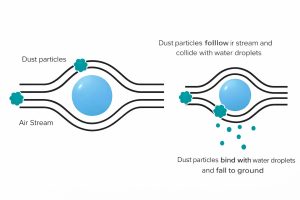
Dust suppression systems work by applying fine droplets of water or suppression solution directly to airborne dust particles.
The droplets bind with the dust particles, increasing their weight so they fall back to the ground instead of remaining airborne.
The effectiveness of a system depends on:
Different applications require different approaches, which is why selecting the correct system is critical.
There is no one-size-fits-all dust suppression solution. The most effective systems are tailored to the specific environment and operational requirements of each site.
Fog cannons, also known as mist cannons, project atomised water droplets over large areas to capture airborne dust.
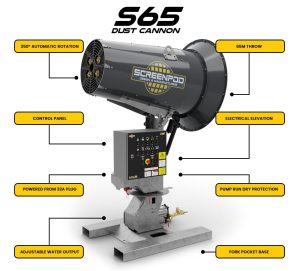
These systems are widely used on:
Fog cannons are particularly effective in open outdoor environments where wide-area coverage is required.
Modern units can often include:
For mobile systems, visit our Mobile Dust Suppression Systems page.
Spray bars provide targeted dust suppression at specific operational points.
They are commonly installed on:
Unlike fog cannons, spray bars focus on localised dust control where dust generation points are fixed and predictable.
These systems are widely used in:
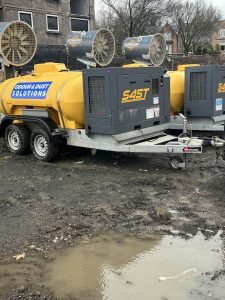
Dust suppression bowsers combine mobile water storage with dust control capability.
These systems are commonly used on:
Towable bowsers provide flexible dust control for changing site conditions and temporary works.
Foam suppression systems use water mixed with foaming agents to create a foam blanket that captures dust particles more efficiently than standard spraying alone.
These systems are especially effective for:
Foam systems can significantly reduce water usage while maintaining effective dust suppression performance.
Learn more about Foam Dust Suppression Systems.
Water availability is becoming a major consideration across construction, demolition and industrial sectors.
Some sites:
Low-water dust suppression systems use:
These systems are increasingly important for:
Indoor industrial environments present different challenges compared to outdoor sites.
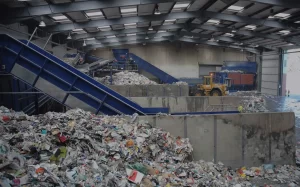
Inside enclosed spaces, airborne dust can:
Indoor systems often use:
These systems are commonly used in:
Construction and demolition projects generate large volumes of airborne dust through:
Effective dust suppression helps contractors:
See our dedicated guide on Dust Suppression for Construction Sites.
Quarries and aggregate sites face some of the most challenging dust control conditions due to:
Effective quarry dust control often requires a combination of:
Learn more on our Dust Suppression for Quarries page.
Different projects require different levels of dust suppression infrastructure.
Temporary systems are ideal for:
These often include:
Permanent systems are designed for continuous industrial operations such as:
These systems are often integrated directly into operational infrastructure.
Poor dust management is one of the most common causes of complaints from nearby residents and businesses.
Complaints can relate to:
A proactive dust suppression strategy helps demonstrate that environmental risks are being actively managed.
For more information, visit our Dust Complaints on Construction Sites guide.
Modern dust management increasingly combines suppression systems with real-time monitoring technology.
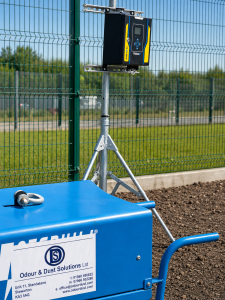
Dust monitoring systems can measure:
Advanced systems can automatically activate suppression equipment when dust levels rise.
This helps businesses:
Learn more about Dust Monitoring Systems and Real-Time Dust Monitoring.
Dust suppression is closely linked to:
Businesses are expected to actively manage dust emissions and minimise environmental impact.
Failure to control dust can lead to:
For more information, see our Dust Suppression Regulations UK page.
The right solution depends on:
Hiring is often ideal for:
Purchasing is often more suitable for:
Many businesses use a combination of hired and permanent systems depending on operational demands.
For temporary projects, visit our Dust Suppression Hire page.
At ODS Environmental Solutions, we focus on practical and effective industrial dust suppression solutions tailored to real operational environments.
We help businesses:
Whether you require:
Our team can help identify the right system for your site. Contact Us
The best dust suppression system depends on the site environment, dust type, operational activity and available infrastructure. Some sites require fog cannons, while others benefit more from spray bars or fixed systems.
Modern systems are designed to optimise water usage through atomisation, targeting and automation. Low-water dust suppression systems are becoming increasingly popular on environmentally sensitive sites.
Dust suppression systems are widely used in:
UK businesses have a legal responsibility to control hazardous dust exposure and minimise environmental nuisance under health, safety and environmental regulations.
Fog cannons provide wide-area airborne dust suppression, while spray bar deliver targeted suppression at fixed operational points such as conveyors and crushers.
Every site presents different environmental and operational challenges. The most effective dust suppression strategy depends on:
To discuss the right solution for your site, contact ODS Environmental Solutions for expert advice on industrial dust suppression systems across the UK.